Chelonus sulcatus
authorJurine 1807
synonymsrimulosus (Thomson, 1874), curvisulcatus (Szépligeti, 1896), rimatus (Szépligeti, 1896)
body
shape(3.6-)4.0 - 4.5 mm [P3][P8]. 3.5 - 4.0 [T2]. 2.8 - 3.6 [E1]. 3 - 4 mm [Te1]. 4.3mm [S2, curvisculatus]. f: (3–)4–4.5 mm, m: (3.8–)4.2–4.5 mm [P8]. ♀ 3.1 - 3.6, ♂ 3.1 - 3.4 mm [T23, rimulosus]. ♀ 3.1 - 4.0, ♂ 3.8 - 4.5 mm [T14].
colorBody black [P3].
head
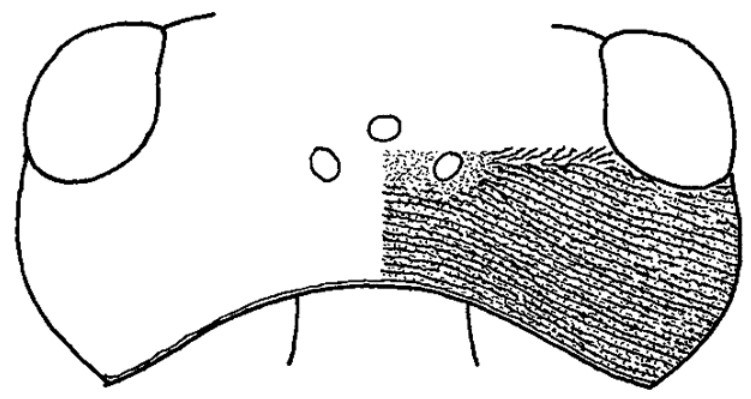
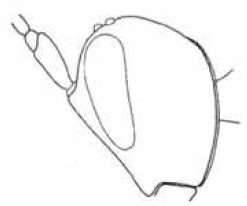
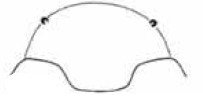
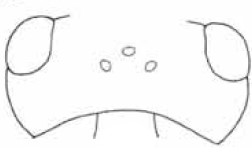
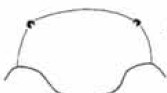
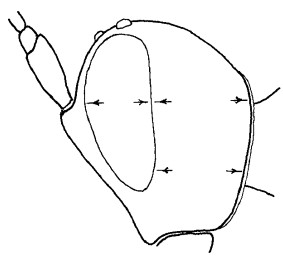
shapeHead in dorsal view (Fig. 5) transverse, twice as broad between temples as long, between temples just broader than between eyes, temple widely rounded and one-fourth longer than (or 1.3 times as long as) eye, occiput excavated. Ocelli middle sized, round, hind imaginary tangent to fore ocellus just before hind pair of ocelli, OOL 1.6 times as long as POL. Eye in lateral view (Fig. 6) three times as high as wide, temple beyond eye twice as wide as eye, ventrally somewhat narrowing. Face 1.9 times as wide as high, inner margin of eyes parallel. Clypeus 1.7 times as wide as high, its lower median margin truncate (Fig. 7). ♀ Head in dorsal view twice (sometimes 1.9-2.1 times) as broad as long, between temples usualy just broader than between eyes (Fig. 5), less usually as broad between temples as between eyes (Figs 14, 17), temple either 1.2-1.3 times as long as eye (Fig. 14) or just longer than eye (Fig. 17) [P3]. Length of temples equal to transverse diameter of eye. Head slightly narrower than mesoscutum, weakly narrowed behind eyes, but strongly narrowed from middle of temples; its width 1.9 - 2.1 times its length, considerably exceeding its height. Temples 1.2 - 1.3 times as long as transverse diameter of eye. Distance between anterior and posterior ocelli 1.4 times POL [OD?]. POL 3 times diameter of ocellus, slightly exceeding OOL. Width of face twice its height. Malar space exceeding basal width of mandible [T2]. The head is markedly narrowed posteriorly [Te1, key]. Head in dorsal view (Fig. 27) transverse, twice as broad as long, head between temples minutely broader than between eyes, eye as long as temple, latter rather deeply rounded, occiput excavated. Eye in lateral view 2.3 times as high as wide, widest at its upper third, temple broadening and one-third broader than eye (Fig. 28). Ocelli small, distance between fore and a hind ocelli 1.4 times greater and distance between hind two ocelli three times greater than diameter of an ocellus; POL somewhat longer than OOL. Face twice as wide as high, inner margin of eyes just subparallel. Clypeus 1.5 times as wide below as high medially, its lower margin convex. Malar space somewhat longer than basal width of mandible [P4, rimulosus]. Width of ocellar triangle as much as one OD greater than OOL. Malar space 0.40 length of longitudinal diameter of eye [T23, rimulosus]. Head slightly narrower than mesonotum, slightly narrowed behind eyes, but strongly narrowed from middle of temples, its width is 1.9-2.1 times its length, much more than height. The distance between the anterior and posterior ocelli is 1.4 times the POL. POL 3 times the diameter of the ocellus and slightly larger than OOL. The width of the face is twice its height. The malar space is greater than the basal width of the mandible. Temples almost equal to transverse diameter of eye [T14].
sculptureFrontal fovea dull, rugulose, carinated in the middle [M]. ♂ Head finely striate (Fig. 5), clypeus with some-what rougher striation, medially almost smooth, shiny. ♀ Clypeus as in Fig. 18, subpunctate and shiny [P3]. Face with striae vertical along eyes and concentric medially; head transversely striate at vertex and vertically striate on temples [T2][T14]. Face laterally rather dorso-ventrally and medially rather concentric striated. Clypeus subpunctate. Head above rather transversely, temple rather dorso-ventrally striated. Entire head shiny [P4, rimulosus].
colorPalpi brown, mandible brown, basally rusty [P3]. Mandibles and palps brown [T14].
antenna
shape ♀Antenna at most as long as head and mesosoma combined and with 16 segments. Third segment usually three times, less usually 2.8-3.1 times as long as broad and penultimate segment subcubic to cubic [P3]. Antennae much shorter than body, 16 segments, filiform []. Length of 3rd antennal segment 3 times its width, preapical one equal to or slightly longer than its width [T14].
shape ♂Antenna nearly as long as body and with 22 segments. Scape 2.6 times as long as broad proximally (Fig. 4). Third segment three times and penultimate segment 1.6 times as long as broad apically, flagellum slightly attenuating distally [P3]. Male antenna with 25 segments [E1]. Antennae ♂ as long as the body, 23 - 24 segments [M]. 22 - 27 segments, filiform [Te1]. The antennae are significantly shorter than the body and have 22 segments [S2, curvisulcatus]. 25 segments [S2, rimatus]. 22 segments [T23, rimulosus]. Antennae 21-22-segmented [T14].
colorScape black with weak rusty tint, flagellum black [P3]. Antenna brownish black [P4, rimulosus].
mesosoma
shapeMesosoma in lateral view 1.5 times as long as high. Transverse strong carina of propodeum medially with a pair of fine denticules and laterally ending in a tubercule [P3]. Propodeum with convex transverse carina gradually passing into lateral teeth [T2]. Distinct lateral teeth [Te1]. Mesosoma in lateral view about as long as high. Mesonotum between tegulae somewhat less broad than head [P4, rimulosus]. Propodeum in lateral view with a pair of tubercules [P8]. Teeth of propodeum small, slightly sharp and almost rectangular. Mesonotum with weak longitudinal ridge in middle, sometimes no ridge [T23, rimulosus]. The length of the mesosoma is almost equal to its height. Propodeum with raised transverse carina gradually passing into lateral teeth [T14].
sculptureMesosoma areolate-rugose, mesonotum rugo-rugulose and behind with longitudinal striate elements, scutellum laterally with longitudinal rugae and medially subpunctate, shiny [P3]. Mesoscutum rugose or alveolate-rugose, with longitudinal elements of rugae prevailing in sculpture [T2]. Mesosoma rugose to areolate-rugose, mesonotum-scutellum-metanotum with longitudinal elements, scutellum medially uneven, propodeum with a strong, transverse and somewhat arched keel ending laterally in a tooth-like emergence [P4, rimulosus]. Mesonotum rugulose-subrugulose and dull, notauli roughly sculptured, scutellum with longitudinal rugosity [T8].
color
legs
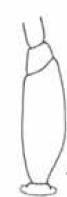
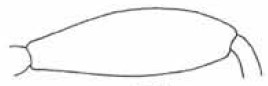
shapeHind femur 2.9 times as long as broad medially (Fig. 8). Inner spur of hind tibia half as long as basitarsus; basitarsus as long as tarsomeres 2-4 combined. ♀ Hind femur 2.8-3(-3.2) times as long as broad somewhat distally (Fig. 19). [P3]. Hind femur 3 times as long as wide. Hind tarsus as long as hind tibia [T2]. Hind femur about three times as long as broad, widest at its middle; hind tibia and tarsus equal in length; hind tibia slightly thicker than usually; hind basitarsus as long as hind tarsal segments 2 - 4 [P4, rimulosus]. Hind femur 2.8–3.3 times as long as broad [P8].
sculpture
colorLegs blackish; fore femur apically and fore tibia entirely yellow, fore tarsus brownish, tibiae + tarsi 2-3 blackish brown, hind tibia with a short yellow ring [P3]. Legs dark brown, fore tibia and tarsus yellowish. Middle and hind tibiae brown, with yellowish band in median part, or this band inconspicuous [T2]. Fore tibia yellow [P8]. Legs dark brown, fore tibia and tarsus yellowish, middle and hind tibia brown, with a yellowish band in the middle part, sometimes slightly noticeable [T14].
wings
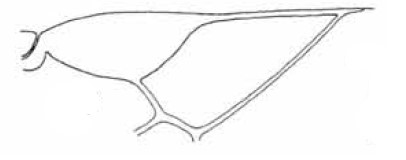
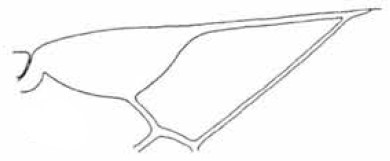
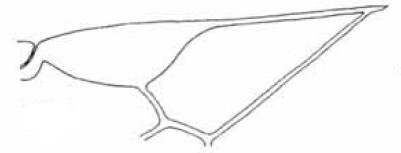
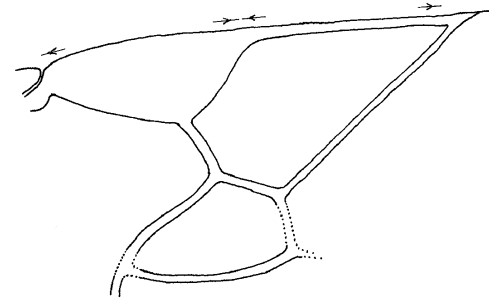
shape♂ Fore wing 0.8 times as long as body. Pterostigma (Fig. 9) 2.35 times as long as wide and issuing r distally from its middle, r one-fifth longer than 3-SR, SR-1 straight, 1-R1 one-fourth shorter than pterostigma. ♀ Pterostigma usually 2.3 times, less usually 2.2-2.4 times, as long as wide, r either somewhat longer than or as long as 3-SR,1-R1 either shorter than or, less usually, as long as pterostigma (Figs 20, 21) [P3]. 1-R1 equal to 2/3 of length of pterostigma or (less frequently) equal to its length [T2]. SR1 straight, radius of hind wings very slightly curved at the base; wings 2 3/4 lin.[M]. Fore wing shorter than body. Pterostigma 2.5 times as long as wide and as long as metacarpal vein, 1-R1 one-third shorter than pterostigma, latter issuing radial vein distally from its middle, r slightly longer than or equal to 3-SR, SR1 straight, 2-SR twice as long as r [P4, rimulosus]. Pterostigma issuing r clearly distally from its middle, r and 3–SR equal in length, 1–R1 somewhat shorter to as long as pterostigma [P8]. 1-R1 as long as pterostigma; 3-SR slightly longer than r, 1/4 length of SR1 and half length of 2-SR [T23, rimulosus]. 1-R1 is one third shorter than the pterostigma or (less often) equal to its length [T14].
colorWings faintly brownish fumous, pterostigma blackish brown and basally with a small pale spot, veins brown, basally yellow [P3]. Tegulae dark [M]. Wings slightly opaque, pterostigma and veins brown [T23, rimulosus].
metasoma
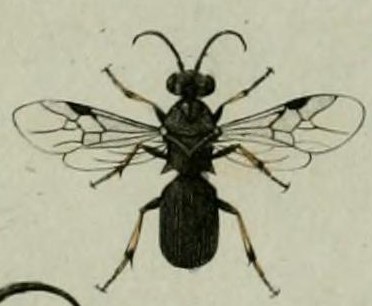
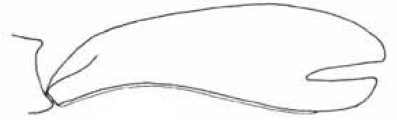
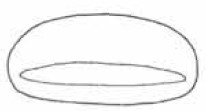
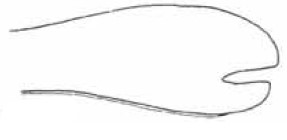
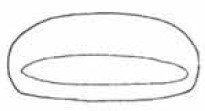
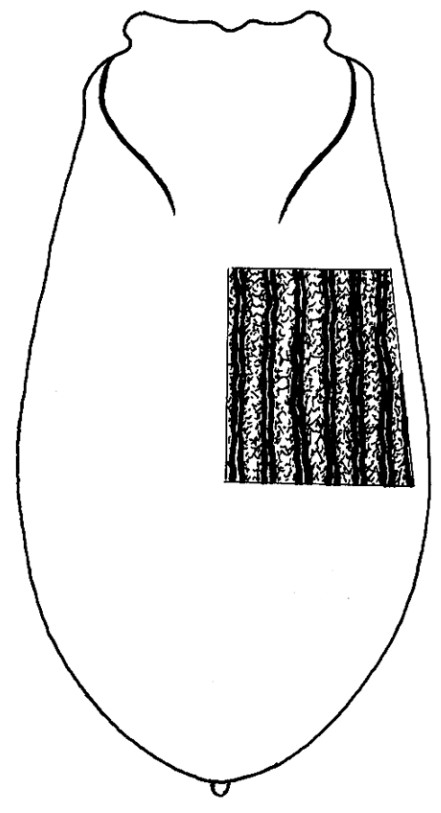
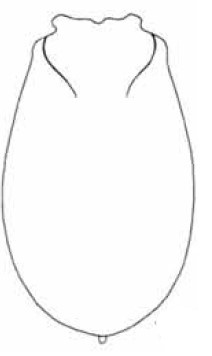
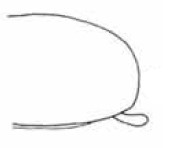
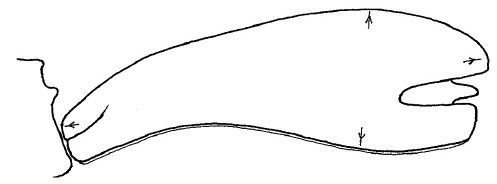
shape♂ Carapace in dorsal view (Fig. 10) 1.8 times as long as broad behind and somewhat broadening posteriorly, apically faintly pointed. Carapace in lateral view (Fig. 11) 2.9 times as long as high. Ventral aperture of carapace shorter than carapace itself, i.e. carapace apically clearly incurved (Fig. 12). ♀ Carapace in dorsal view 1.8 times, sometimes 1.7-1.9 times as long as broad somewhat posteriorly, Carapace in lateral view (2.7-) 2.8-2.85 times as long as high behind, apically declivous (Fig. 24) to rather truncate (Fig. 25). Ventral aperture of carapace somewhat shorter than carapace itself, i.e. carapace apically somewhat incurved (Fig. 26, see arrow) [P3]. Abdominal carapace weakly but distinctly deflexed at apex, more or less steeply sloping to apex, highest near apical 1/3. Metasoma more strongly narrowed toward apex than toward base, twice (occasionally 1.7-1.9 times) as long as wide [T2]. Carapace as long as head and mesosoma together, in dorsal view twice as long as broad at middle, posteriorly somewhat more narrowing than basally; in lateral view higher posteriorly than anteriorly or three times as long as high; apically just incurved ventrally, ventral cavity almost as long as carapace itself. Basal pair of keels short and converging [P4, rimulosus]. ♂ Carapace in dorsal view bent and 2.7–2.8 times as long as high posteriorly [P8]. Abdomen eggshaped, more strongly narrowed to apex than to base, on apex weakly bent under; length 1.7-2 times width [T23, rimulosus]. ♀ Metasoma more strongly narrowed toward apex than toward base; metasomal length twice its width, but sometimes 1.7–1.9 times. The carapace is apically weakly but distinctly bent forward, more or less steeply descending towards its apex; the greatest height of the carapace is near its apical third. ♂ Metasoma 1.6–1.8 times as long as wide [T14].
sculpture♂ Longitudinally sulciform striate, interstriations uneven-sub-rugulose, behind rugo-rugulose. ♀ longitudinally sulciform striate without anastomoses, interstriations rugulo-subrugulose (Figs 22) [P3]. Metasoma coarsely longitudinally rugose, shiny [T2][T14]. Metasoma in basal half with sharp longitudinal rugae [Te1]. Striation of carapace strong [P8]. ♀ The metasoma is covered with coarse longitudinal rugae. ♂ Metasoma with coarse longitudinal rugae along its entire or almost entire length [T14]
colorCarapace of both sexes entirely black [E1].
♀ ovipositorOvipositor sheath very short, concealed [P3][T2][P4]. The ovipositor valves are very short, sometimes hidden [T14].
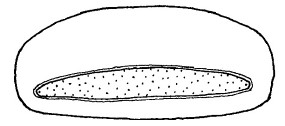
♂ apertureApical foramen wide and narrow, 8 times wider than medially high (Fig. 13). Apical foramen extending to posterior one-fifth of metasoma [P3]. AAO significantly exceeding half width of metasoma, slit-shaped, parallel-sided [T2]. Male apical aperture slit-like, transversely elongated, significantly exceeding half width of carapace [E1]. Metasoma ♂ with an oblong, reniform anal fissure, thrice as broad as long, margined and ciliated allround [M]. Aperture 2 - 3 times as wide as high [Te1]. Apical opening is transversely long, about 9 times longer than it is high, and as long as the posterior width of the metasoma; smooth and shiny on the rim [S2, curvisulcatus]. Aperture oval, rather large, occupying 0.4-0.5 width of metasoma, width 3-4 times height [T23, rimulosus].
other info
distributionAT, CH, DE, CZ, DK, FR, GB, NL, PL, SE [FE].
remarks
hostsEvetria buoliana Schiff. [Sm].






![head in dorsal view [rimulosus]](species/chelonus_sulcatus/fig_27.jpg)
![head in lateral view [rimulosus]](species/chelonus_sulcatus/fig_28.jpg)
![hind femur and tibia [rimulosus]](species/chelonus_sulcatus/fig_29.jpg)
![distal part of right fore wing (♀) [rimulosus]](species/chelonus_sulcatus/fig_30.jpg)
![distal part of right fore wing (♀♂) [rimulosus]](species/chelonus_sulcatus/fig_31.jpg)
![right lateral part of head in dorsal view [rimulosus]](species/chelonus_sulcatus/fig_32.jpg)
![♀ carapace in dorsal view [rimulosus, lectotype]](species/chelonus_sulcatus/fig_33.jpg)
![♀ carapace in dorsal view [rimulosus]](species/chelonus_sulcatus/fig_34.jpg)
![♀ carapace in lateral view [rimulosus]](species/chelonus_sulcatus/fig_35.jpg)
![♀ carapace in ventral view [rimulosus]](species/chelonus_sulcatus/fig_36.jpg)
![♂ posterior end of carapace in frontal view [rimulosus]](species/chelonus_sulcatus/fig_37.jpg)
![part of forewing [rimulosus]](species/chelonus_sulcatus/fig_42.jpg)
![♂ metasoma [rimulosus]](species/chelonus_sulcatus/fig_43.jpg)