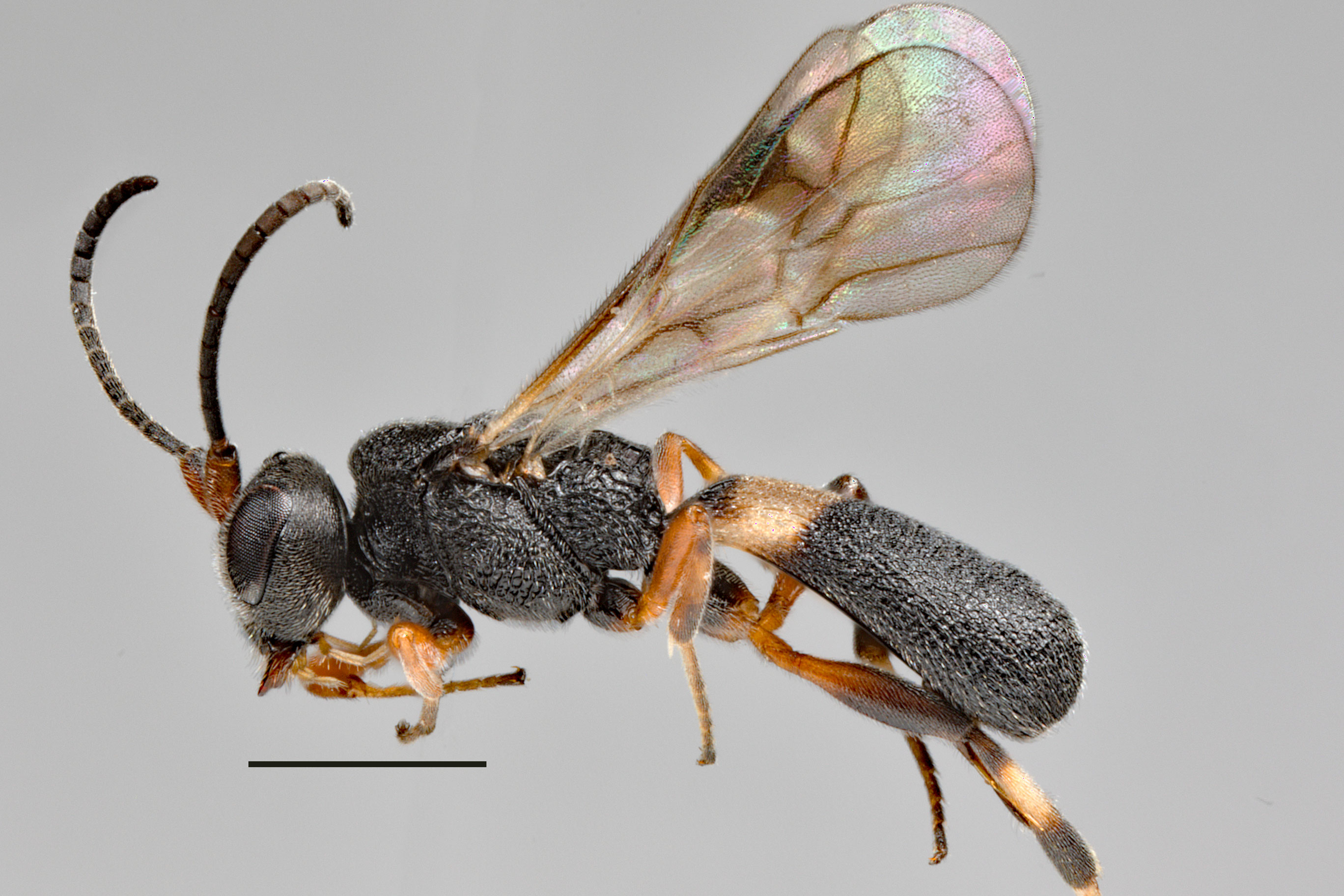
shape♂ Length 3 - 5 mm [S2][Te1]. ♂ 3.8mm, ♀ 3.6-3.8 mm [P3]. ♀ 2.5 - 3.0 mm [P13][T4]. ♀ 3.6 - 3.8mm, ♂ 2.5 - 3.0 mm [T14].
colorBlack and matt [S2]
head
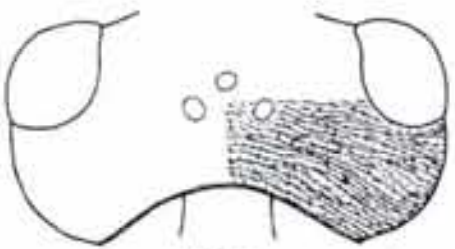
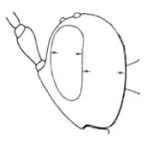
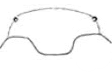
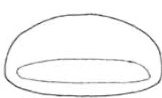
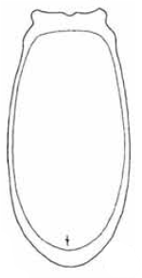
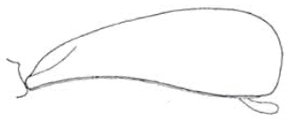
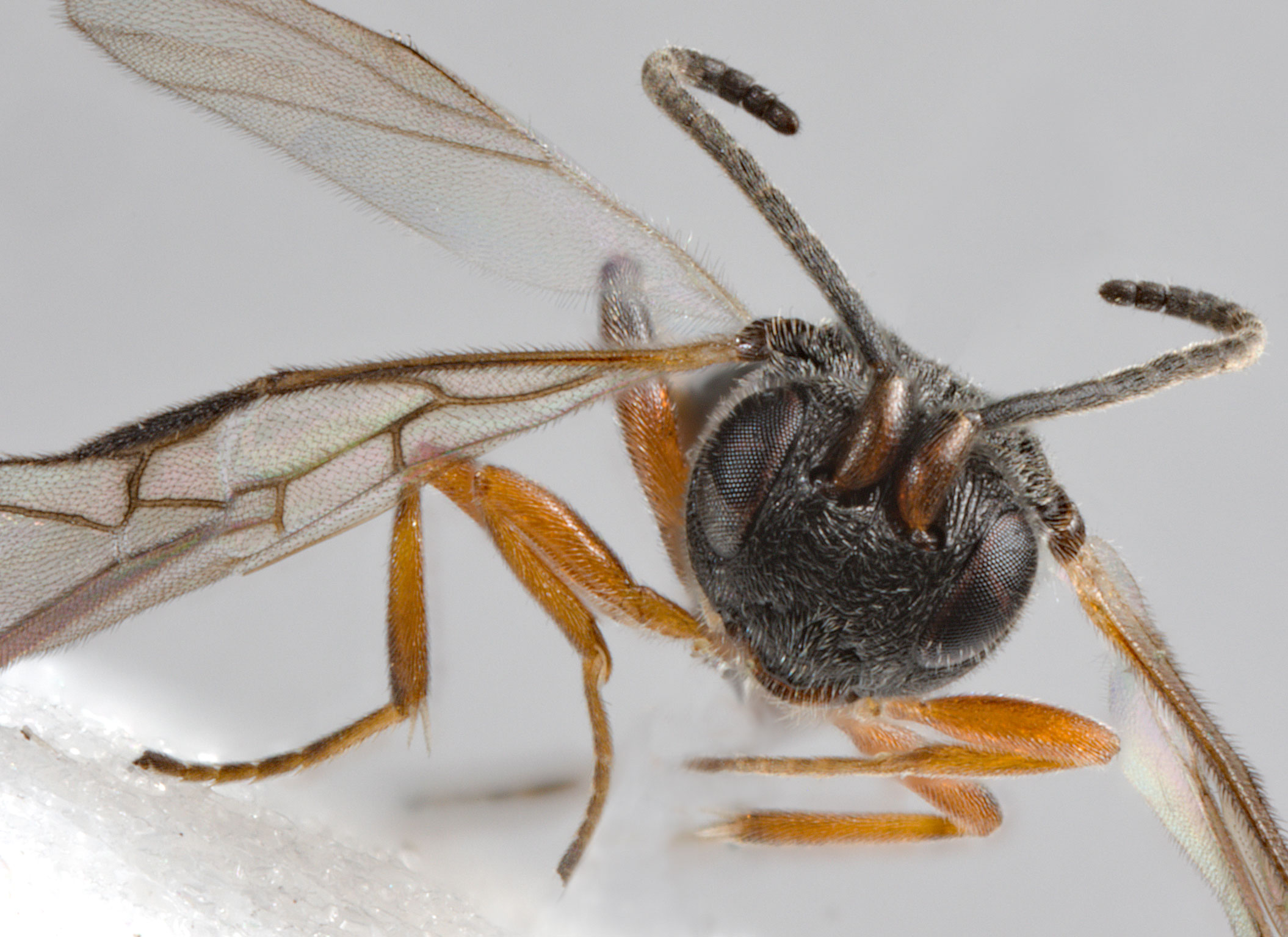
shapeHead in dorsal view (Fig. 2) transverse, twice as broad as long, eye a bit longer than temple, temple rounded, occiput excavated. Ocelli small and round, hind imaginary tangent to fore ocellus before hind pair of ocelli, OOL twice as long as POL. Eye in lateral view 2.3 times as high as wide, temple beyond eye one-fourth (or 1.3 times) wider than eye (Fig. 3). Malar space slightly shorter than basal width of mandible. Face 1.4 times as wide as high, inner margin of eyes faintly converging ventrally. Clypeus twice as wide as high, medially produced and its lower margin truncate (Fig. 4) [P3]. Head in dorsal view somewhat more transverse, twice as broad as long, temple not bulging (Fig. 13) [P1]. The longitudinal diameter of the eye is 3–3.5 times the malar space [T13]. The head is roundly narrowed behind the eyes, its width is twice its length. Temples slightly longer than the transverse diameter of the eye. OOL is twice as large as POL. The malar height is slightly greater than the basal width of the mandible. Face width 1.4 times its height [T14].
sculptureFace rugose; clypeus punctate, interspaces shiny and about as great as punctures. Vertex and occiput finely striate (Fig. 2), temple also striate [P3].Vertex behind ocelli and face finely transversely rugose [T14].
color♂ The palpi are yellow [S2][P3]. ♀ palpi pale yellow [P3]. Palpi (partly) yellow to reddish yellow [P1].
antenna
shape ♀Antennae slightly longer than head and mesosoma combined; length of 3rd antennal segment 3.5 times its width, preapical one equal to or slightly longer than its width [T14].
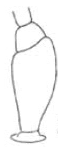
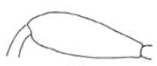
shape ♂♂ antennae have 27 segments [S2][Te1]. Scape (Fig. 1) slightly swollen, twice as long as broad and obliquely truncate apically [P3].
colorLower side of first segments is yellow [S2]. Scape red [S4][FTR].
mesosoma
shapeMesosoma in lateral view 1.4 times as long as high. Propodeum with a transverse carina ending in a pair of tubercules [P3]. Length of mesosoma 1.5 times its height [T7][T13]. Mesosoma length 1.4–1.5 times its height. Propodeum with transverse carina and small lateral teeth [T14].
sculptureMesosoma finely rugulose, the rugae change to furrows only at the posterior part of the propodeum [S2]. Rugose, mesonotum medially with striate elements, scutellum with strong punctures [P3]. Mesonotum finely longitudinally rugose in front of scutellum [T14].
color
legs
shapeHind femur 3 times as long as broad somewhat distally (Fig. 5). Inner spur of hind tibia half as long as basitarsus. Hind basitarsus as long as tarsomeres 2-3 and one-third of tarsomere 4 combined [P3]. Hind femur 3 times as long as wide [T14].
sculpture
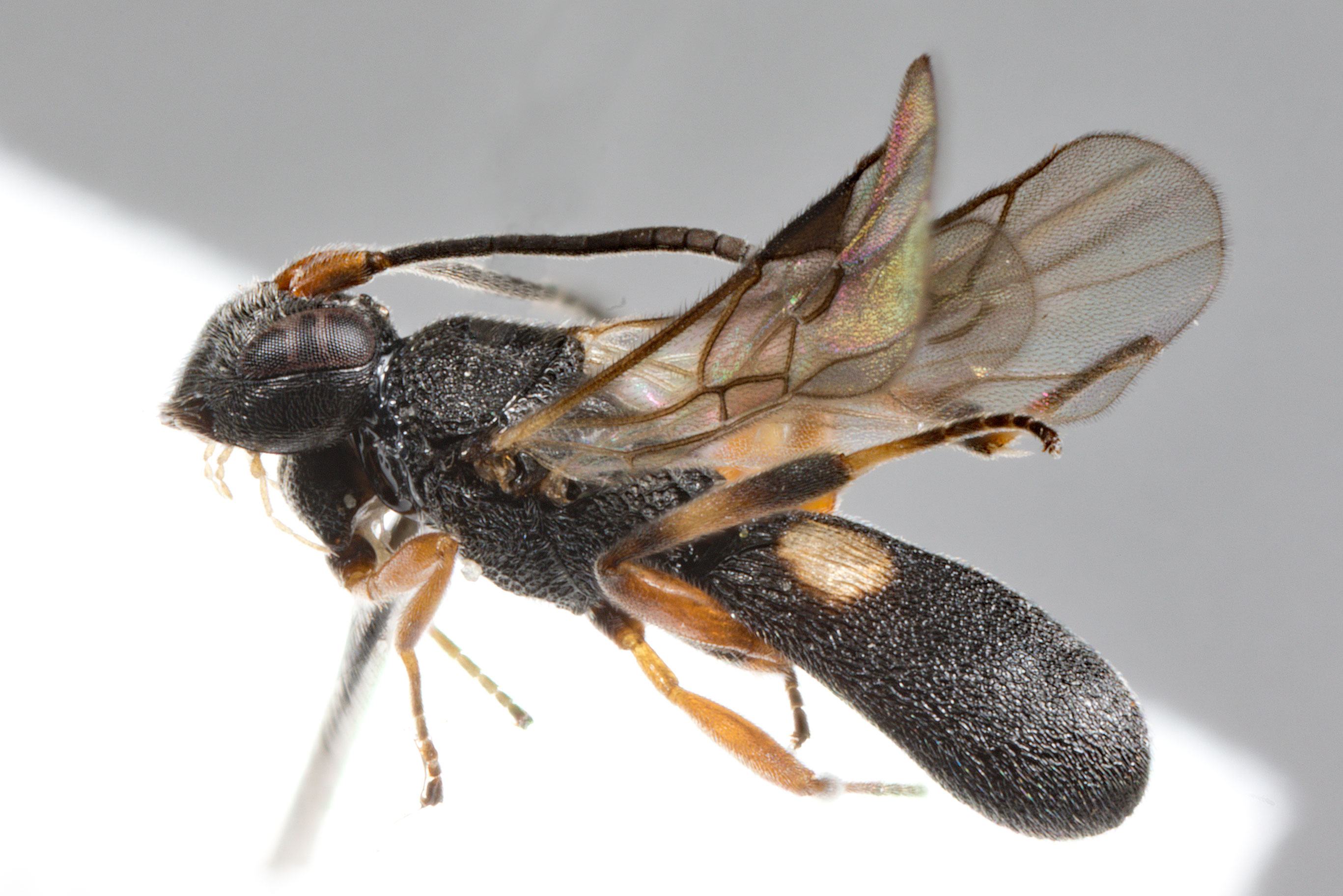
colorThe legs are yellow-red, the middle and hind coxae black, the tips of the hind femora are brownish, the middle of the mid- and hind tibiae are white, the base and tip of the mid tibia brown, of the hind tibia black. The tarsi of the hind leg are blackish, while the fore- and mid tarsi only have black claws [S2]. Legs reddish yellow, hind coxae blackish, hind tibia brownish with a median yellow ring. Hind tarsus brownish. ♀ Apex of hind femur eventually darkening [P3]. Hind femur reddish at base, occasionally nearly as far as apex; hind tibia yellow in the middle [T7][T13]. Hind femora black {FTR]. Hind femora at base, sometimes light-colored almost to apex. Hind tibia yellow in middle [T14].
wings
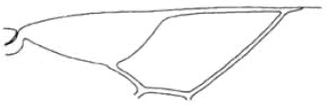
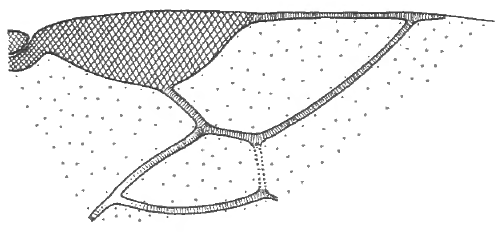
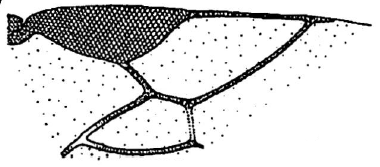
shapeSR-1 is straight [S3]. Fore wing just shorter than body. Pterostigma (Fig. 28) 2.5 times as long as wide and issuing r distally from its middle, r a bit shorter than 3-SR, SR1 just bent, 1-R1 somewhat shorter than pterostigma. ♀ SRI either just bent or straight [P3]. Pterostigma about 2.5 times as long as wide, marginal cell relatively long, 1-R1 somewhat shorter than length of pterostigma (Fig. 14) [P1] [T14].
colorWings brownish fumous, pterostigma and veins brown [P3].
metasoma
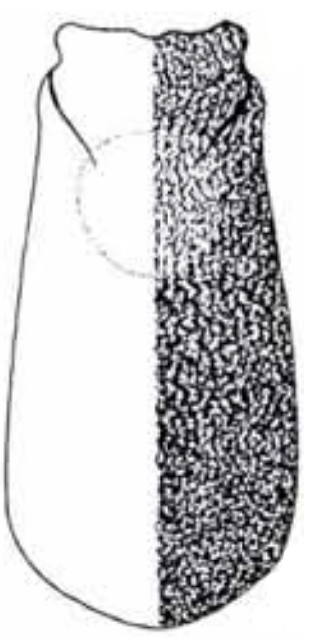
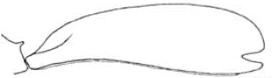
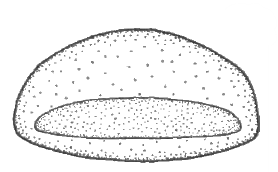
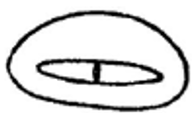
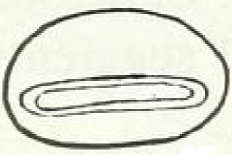
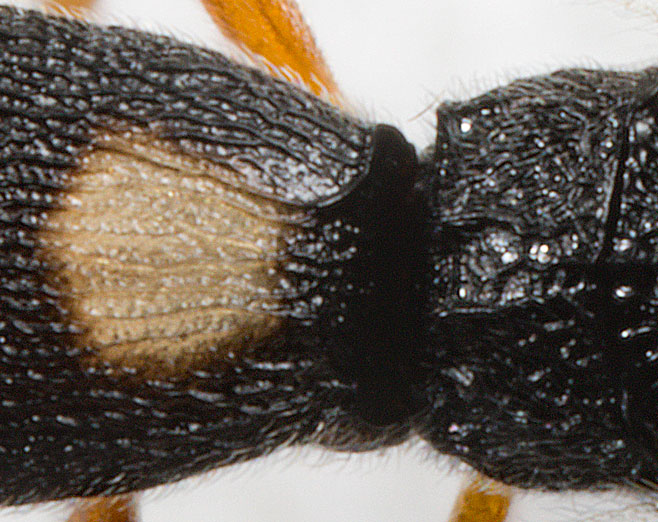
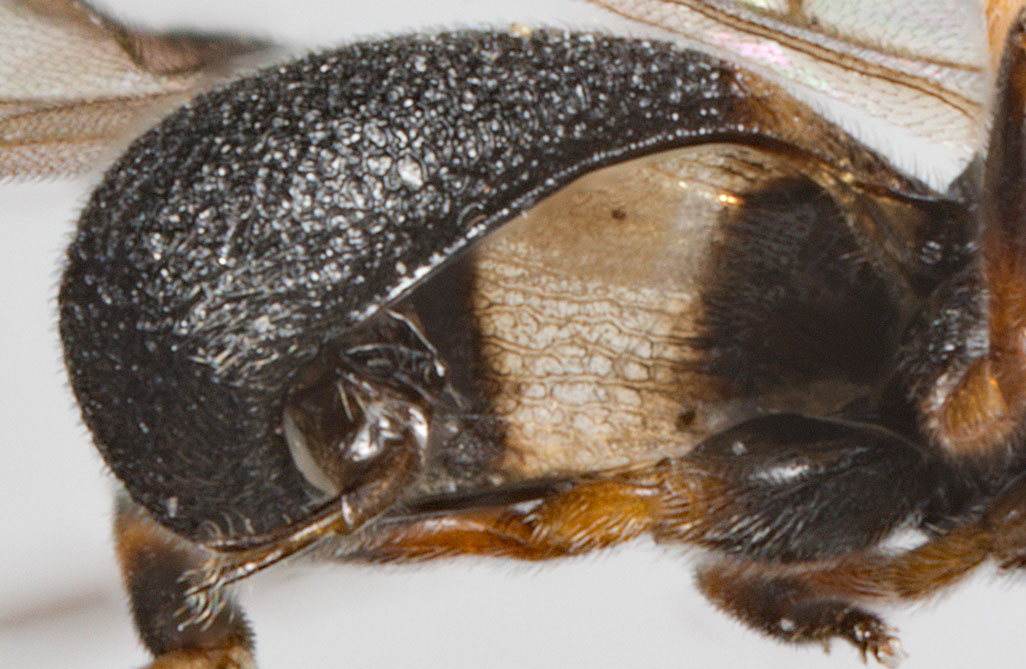
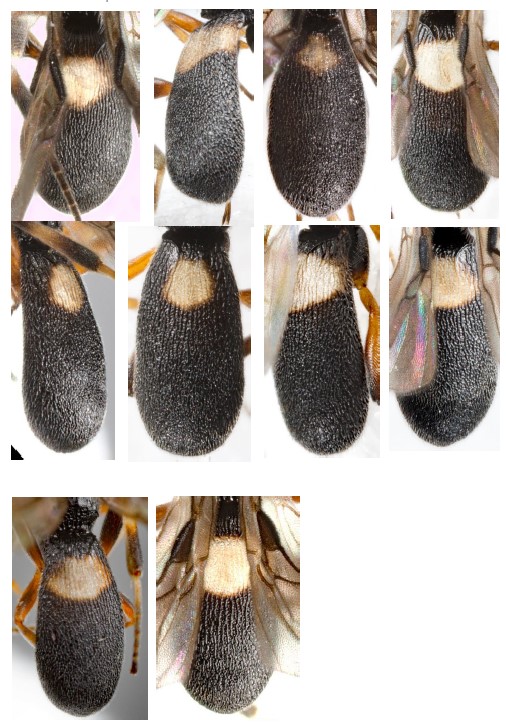
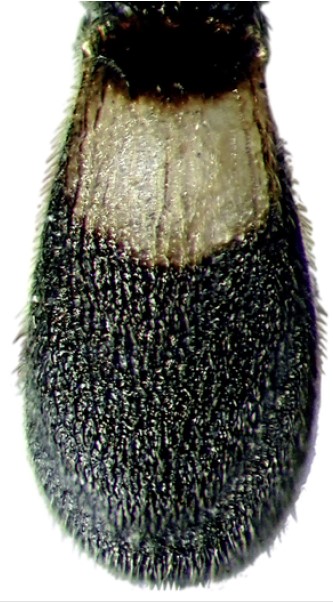
shapeThe metasoma is a bit longer than the head + mesosoma, narrow and elongated, at the base with two weak carinae [S2]. ♂ Carapace in dorsal view (Fig. 7) 2.1 times as long as broad posteriorly, slightly broadening posteriorly and faintly pointed apically. Pair of basal keels short, Carapace in lateral view (Fig. 8) 3.4 times as long as high behind. ♀ Carapace in dorsal view 2-2.2 times as long as broad behind (Fig. 10). Carapace in lateral view (Fig. 12) 2.6-3 times as long as high behind. In ventral view aparture of carapace almost as long as carapace itself, i.e. carapace apically slightly incurved (Fig. 11, see arrow). [P3]. ♀ Metasoma regularly rounded in posterior third [T7]. Metasoma widened toward apical third, slightly bent apically anteriorly, 2–2.2 times as long as wide. ♂ Metasoma usually 2.1–2.2 times as long as wide [T14].
sculptureCarapace rugose and anteriorly with weak striate elements (Fig. 7) [P3]. Metasoma with distinct longitudinal rugae [T7]. The metasoma is softly longitudinally rugose [T14].
colorAt the middle of the metasoma, near the base is an approximately triangular, yellow spot visible [S2]. At the base of the metasoma a pentagonal yellow spot [S4]. Basal and nearly round macula of carapace pale yellow [P3]. ♂ The metasoma is often without yellow basal spots [T14]
♀ ovipositor
♂ apertureApical aperture 3-4 times as wide as high [S2][Te1]. 4-5 times as wide as high [S4]. Apical foramen of carapace six times as wide as high (Fig. 9) [P3]. Aperture slit-like, markedly wider than half of apical part of carapace [T7]. Aperture six times as wide as high [P1]. Aperture extremely large, slit-shaped [T4].
other info
distributionHungary, …[P3], DE [FE], NL [own observation]
Die Fühler sind 27-gliedrig. Fein-runzlig, die Runzeln bilden nur auf dem hinteren Theil des Mesomesosoma Furchen. Der Hinterleib ist etwas länger als Kopf und mesosoma; schmal und länglich, an der Wurzel mit zwei schwachen Kanten versehen; die Apicalöffnung ist 3 —4-mal so lang als hoch. Schwarz und glanzlos. Die Taster sind gelb, ebenso die untere Seite des ersten Fühlergliedes. Auf der Mitte des Hinterleibes, Nahe zur Basis, ist ein ungefähr dreieckiger, gelber Fleck sichtbar. Die Beine sind gelbroth, die mittleren und hinteren Hüften schwarz; die Spitzen der Hinterschenkel sind bräunlich, die Mitte der mittleren und hinteren Schienen weiss, die zwei Enden der mittleren braun, die der hinteren schwarz; die Tarsen der Hinterfüsse sind schwärzlich, während auf den vorderen nur die Krallen schwarz sind. Länge 3—5 mm.
Data used in the multi-access key
These data are collected from the species descriptions and redescriptions, from published figures and photographs and from own measureements and observations. For a description of the different variables and value classes see this pdf.
morphology
basic information
female
male
body length (mm):
(2.5) 2.5 - 3.8 (4)
(2.5) 2.5 - 3.8 (4)
number of antennal segments:
16
(25) 25 - 28 (29)
head, dorsal view
Head width : length
narrow, wide
narrow, wide
Temples narrowing - widening
parallel, widening
parallel, widening
Eye length : temple length
0.75 - 1.0, 1.0 - 1.25
0.75 - 1.0, 1.0 - 1.25
Roundness temple
strong, medium
strong, medium
POL : OD
<= 2, 2 - 3
<= 2, 2 - 3
Ocellar triangle shape
narrow
narrow
Excavation of head
15 - 25%
15 - 25%
head, lateral view
Head height : length
short
short
Eye height : length
very long
very long
Temple length : eye length
short, long
short, long
head, frontal view
Head width : height
---
---
Face width : height
very narrow
very narrow
Eyes converging ventrally
distinctly converging, about parallel
distinctly converging, about parallel
EH : MSL
very long
very long
Clypeus width : height
transverse, very transverse
transverse, very transverse
Clypeus extending above bottom of eyes
---
---
Tentorial pits
---
---
Shape of lower margin clypeus
truncate
truncate
antennae
Antennal shape
---
filiform, not widened
Segment 3 length : width
medium, long
---
Penultimate segment length : width
short
---
Length of antenna : length of body
1: very short, 2: short
---
mesosoma, lateral view
Length : height
short, medium
short, medium
transverse carina
present
present
lateral teeth
weak, small, short
weak, small, short
mesosoma, ventral view
Prepectal carina lamelliform
indistinct
indistinct
legs
Hind femur length : width ratio
short
short
Hind tibia length : hind tarsus length ratio
---
---
Hind tibia (longest) spur length : metatars length ratio
Key to the Insects of the European Part of the USSR Volume III. Hymenoptera. Part four. Chapter 16
P3: Papp 2004
A revision of Szépligeti's Microchelonus species described from Hungary (Hymenoptera: Braconidae: Cheloninae).
T14: Tobias, 2010
Palearctic species of Microchelonus Szépligeti (Hymenoptera: Braconidae, Cheloninae): key to species.
T7: Tobias, 2001a
Species of the Genus Microchelonus Szepl. (Hymenoptera, Braconidae) with Yellow Abdominal Spots and Pale Coloration of the Body from the Western Palaearctic Region